 BioPlanet: Tutorial
The NCATS BioPlanet catalogues all human pathways, their healthy and disease state annotations, targets, and bioactivity assays that can be used to probe these pathways.
Pathway annotations from 7 publicly available sources were curated and then subjected to thorough redundancy and consistency cross-evaluation. Resultant set of pathways was supplemented with data from literature, yielding 1,658 distinct human pathways.
The BioPlanet browser supports interactive browsing, retrieval, and analysis of human pathways, visual exploration of pathway connections, pathway categorization, and pathway search by gene targets, category, and assay availability.
This tutorial succinctly describes all key features of NCATS BioPlanet.
A complete list of 1,658 pathways can be seen by clicking the button on the menu bar.
All pathway lists (and thus all search query results) are rendered in this manner.
Each pathway entry lists pathway name, basic classification parameters, such as Categories, to which the pathway belongs, and sources of biological Assays available for this pathway. These parameters allow for a quick high-level analysis of multiple pathways.
Each entry has convenient linkouts to different sections of the corresponding pathway details page, such as Pathway Map, Genes, associated Diseases, all pathway Categories, and a detailed account of all known biological Assays by source.

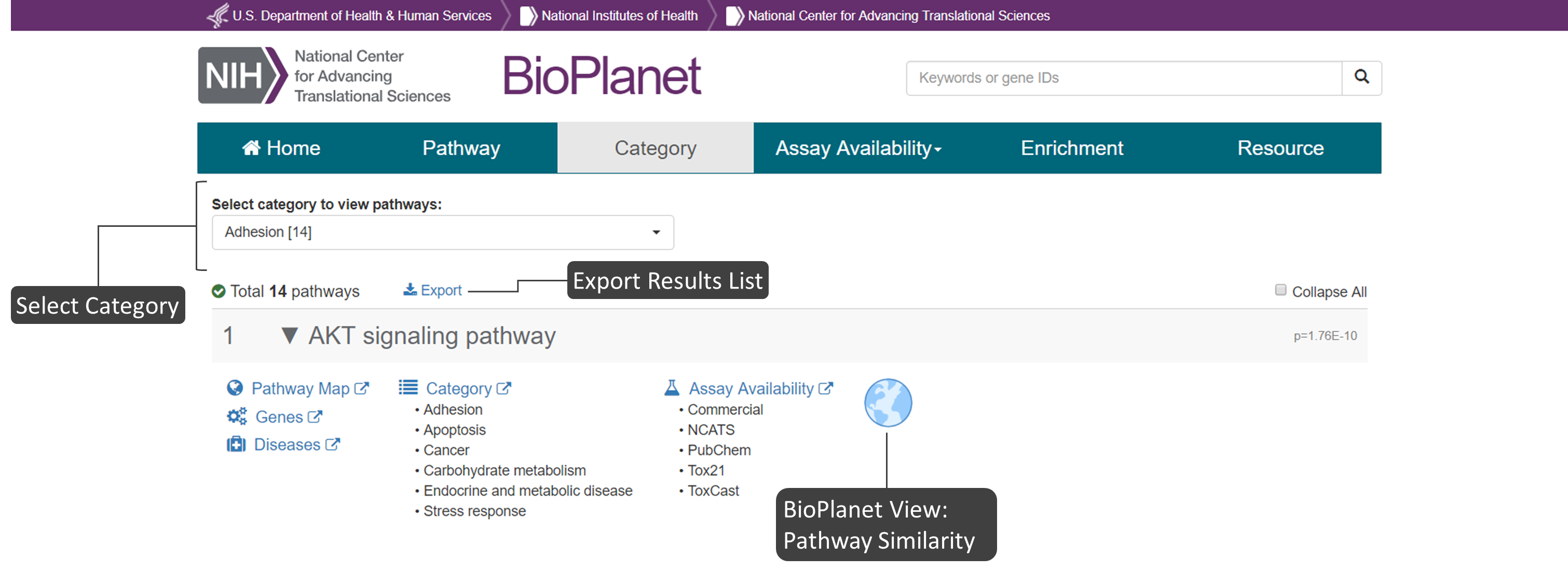
Clicking the button leads to a similar view that allows to group pathways by one of the high-level categories based on the functional characteristics of the pathway or its localization at the cellular, tissue, or organ level.
Category view adds one other element to every pathway entry, a large planet symbol. Clicking this element shows a sphere ("BioPlanet") with all pathways in a selected category (or other subset) represented as points on the sphere. Distances between the points characterize similarity between the pathways. A click on a point on the sphere will take you to the corresponding pathway summary entry on the page.

Clicking the button reveals all available sources of bioactivity assays, and allows to subset pathways accordingly.

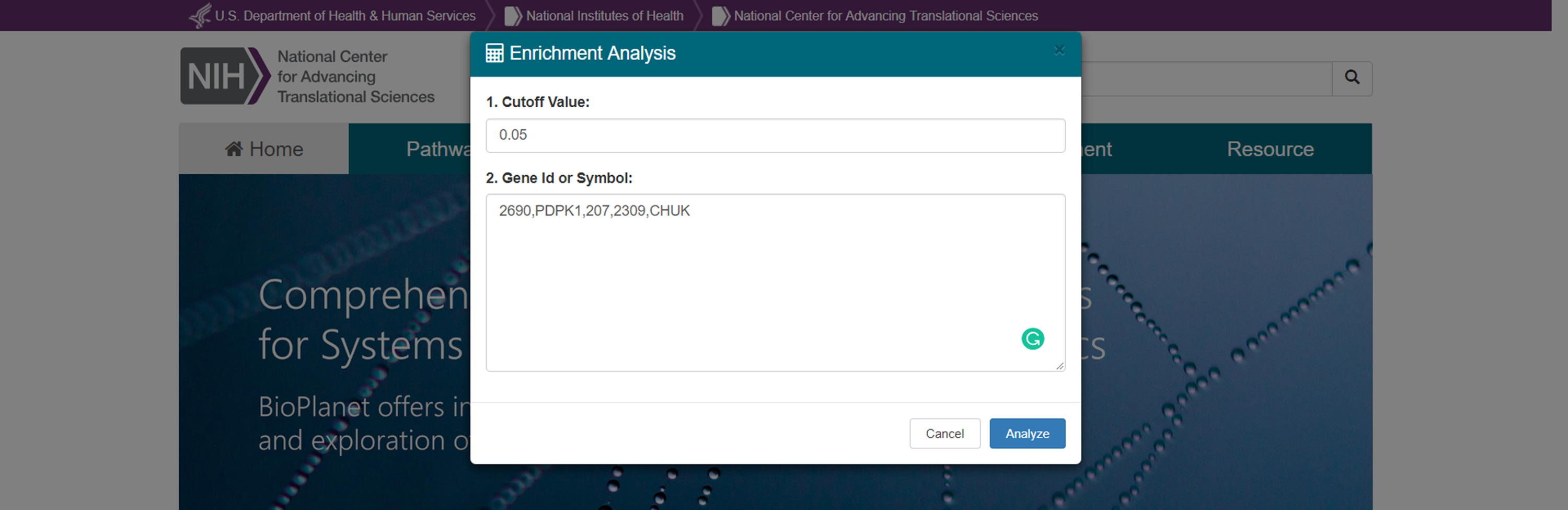
BioPlanet allows searching for pathways that contain a specific subset of genes. Clicking button opens a dialogue that accepts comma-separated Entrez Gene IDs or Gene Symbols, and allows to specify a cutoff p-value.
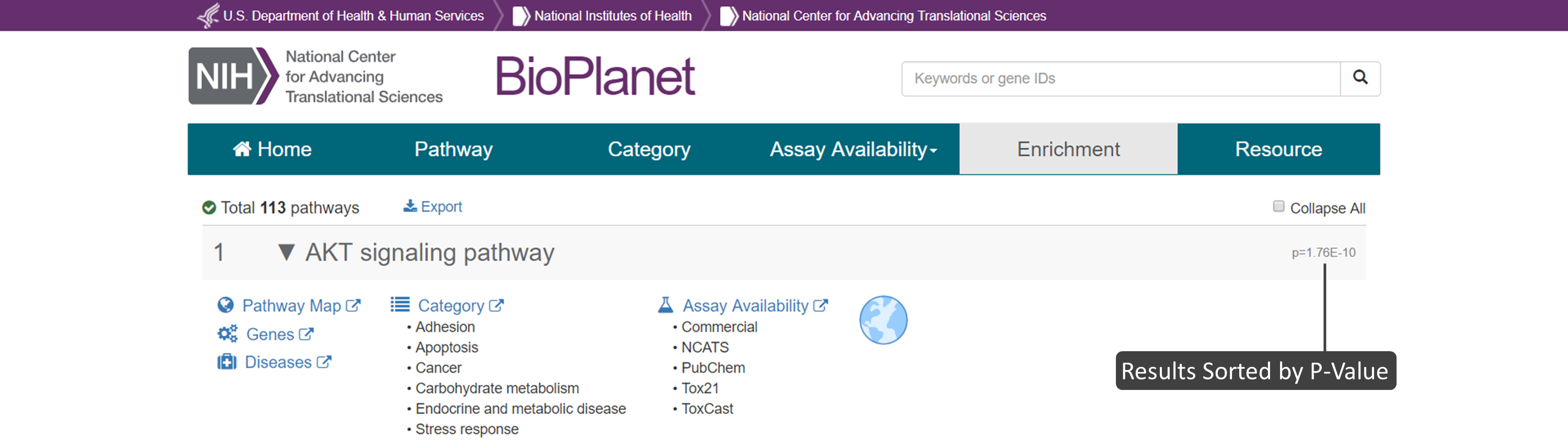
For example, a search for "2690,PDPK1,207,2309,CHUK" yields 113 pathways sorted by p-value.
Search box is located at the top of the page. It allows searching for any terms in Pathway Names as well as Gene Symbols and even Entrez Gene IDs.
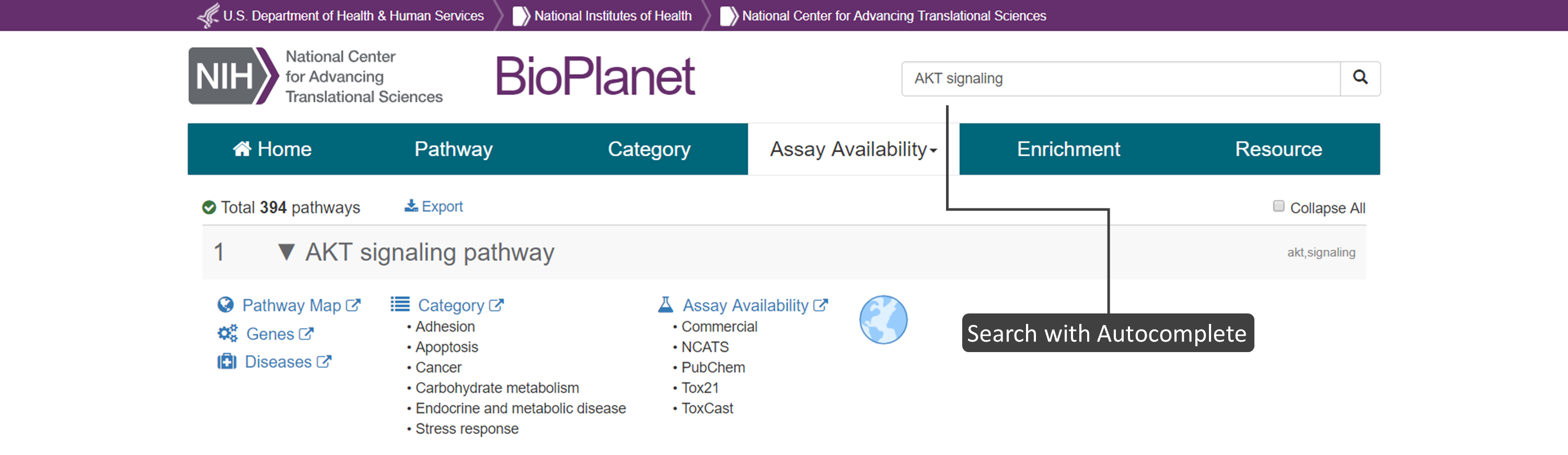
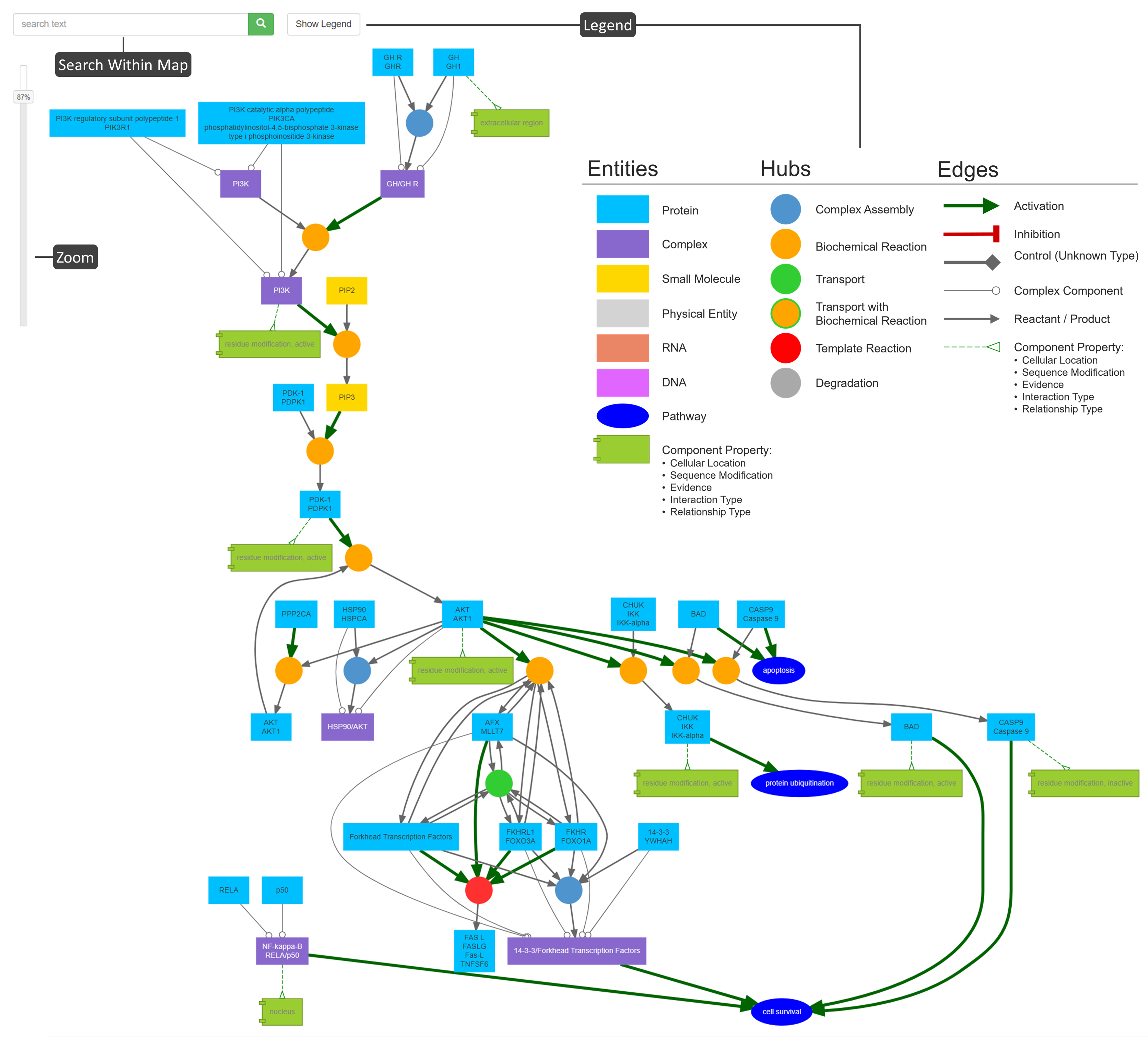
Clicking on any of the links in a pathway entry on a list of results would take you to the pathway details page. Pathway Map tab contains a clickable preview of the map, along with the buttons to show the map legend and download the map in the SVG format.
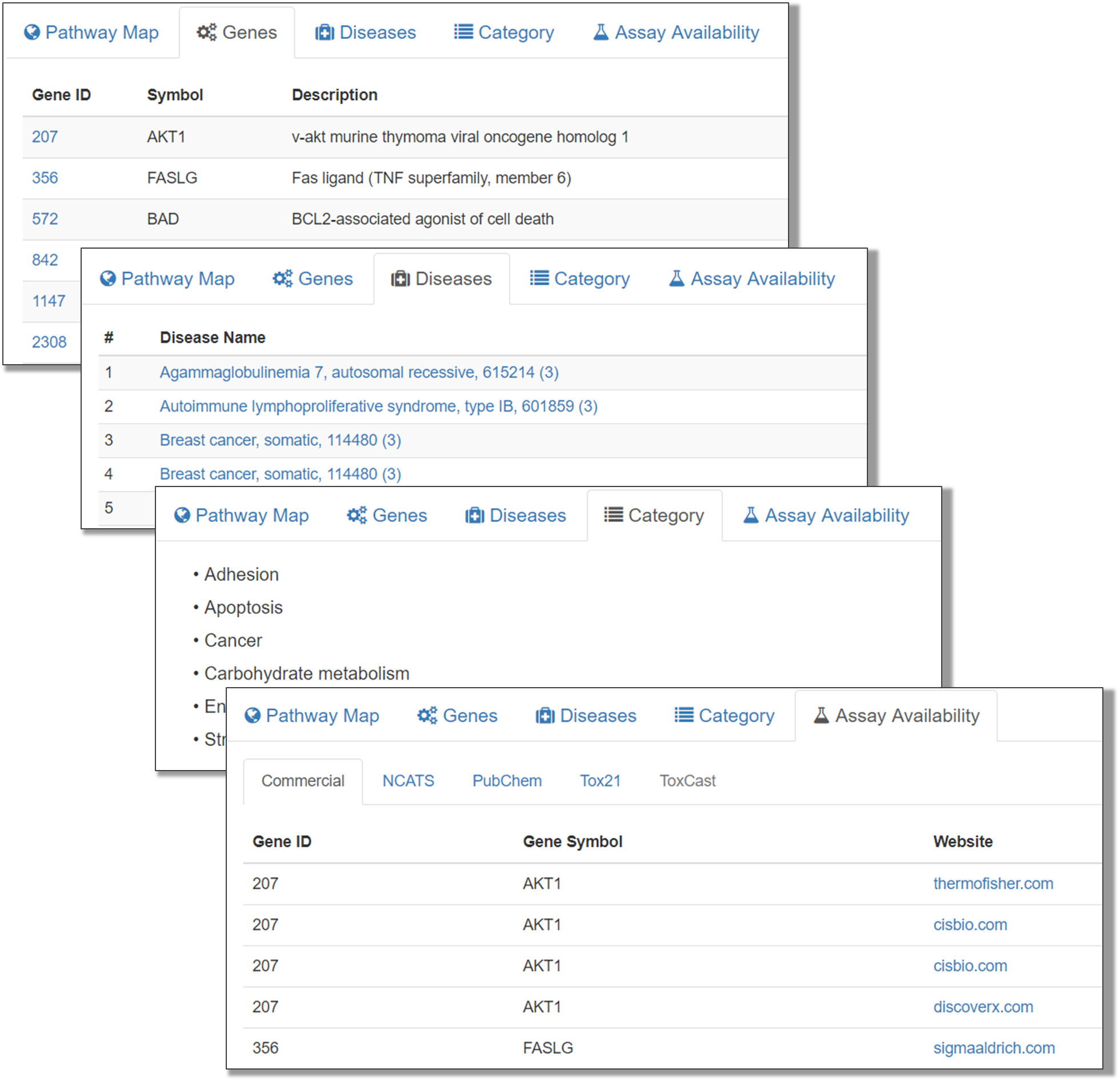
Other tabs contain lists of pathway genes, diseases, in which the pathway is implicated, pertaining categories, and all bioactivity assays segregated by source.
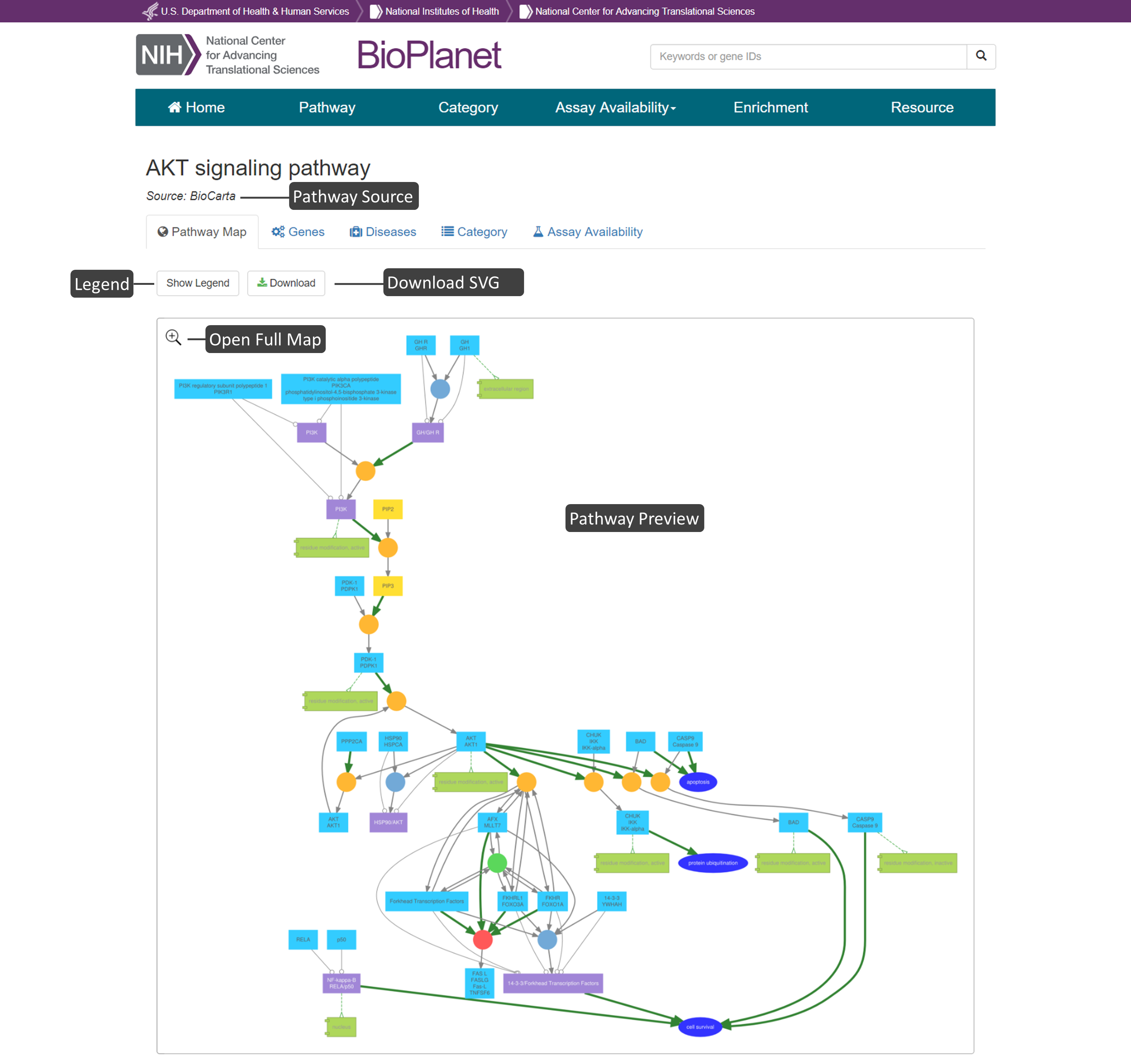
Clicking on a pathway map preview opens a full map in a new window. The map features a slider zoom level control (when needed), a button to show or hide the legend, and a search box.
Upon successful search, pertaining map elements are highlighted with blinking orange border, and the rest of the map is dimmed. This allows for a quick identification of search results in the context of the whole map. You can exit this mode by pressing the "Esc" key on the keyboard.
Many elements are clickable, and will show a dialog with identifiers and references to external sources.
Elements of the pathway network are color-coded, have distinct memorable features, and are designed to minimize visual clutter.
All pathways maps feature the most rigorous, complete network of connections and interdependencies, exactly as described in the source. There are 7 types of Entity nodes: Protein, Complex, Small Molecule, Physical Entity, RNA, DNA, and Pathway. Each Entity node has Properties (Cellular Location, Sequence Modification).
Entities can enter or exit reaction Hubs (Complex Assembly, Biochemical Reaction, Transport, Template Reaction, or Degradation) either as Reactants/Products or as Controllers.
A Controller can Activate or Inhibit a process described by a Hub.